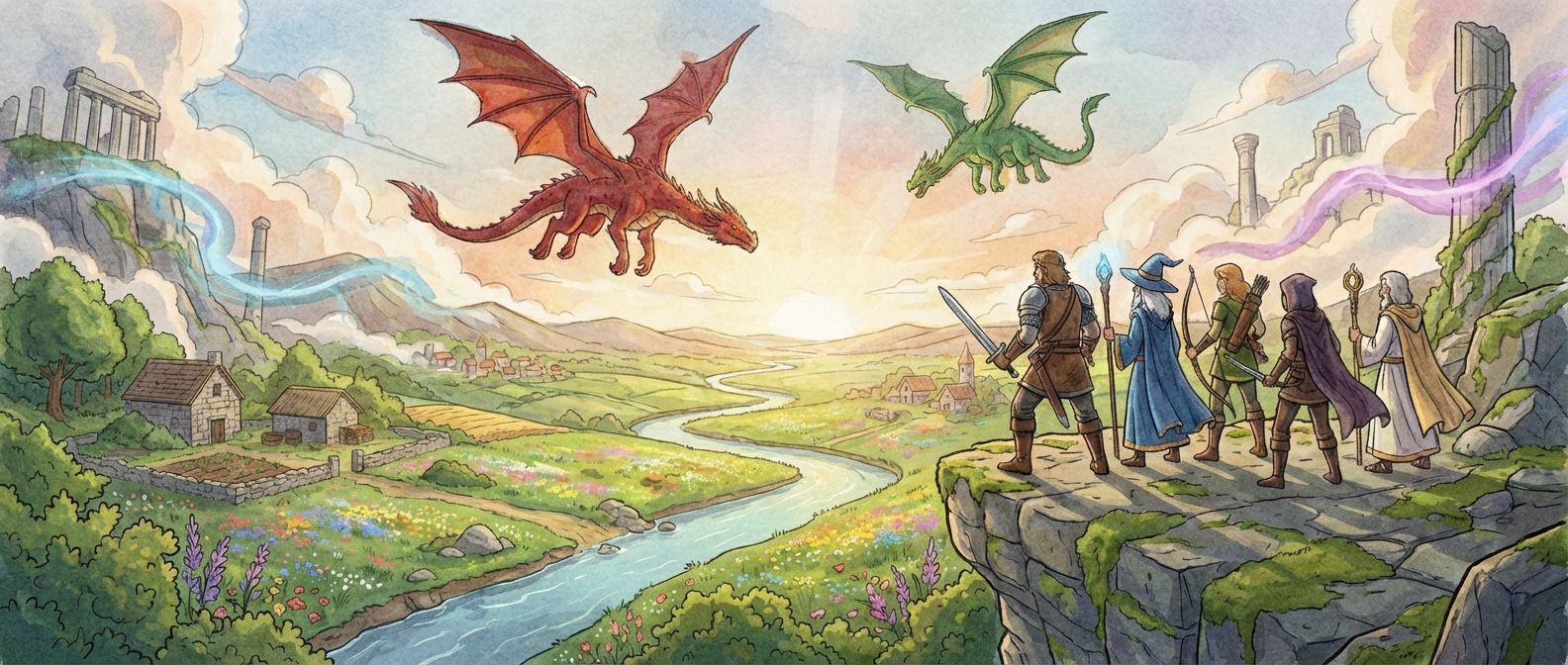
Attribution: Image inspired by human creativity; generated using Gemini AI Studio and Nana Banana Pro
I believe we all survived! 🤣
The moment of doubt
Picture this: It’s 9PM on a Tuesday. I am past my chocolate and lavender tea 🫖 ritual. My screen is full of code that may or may not be working, honestly, at this point, I’m not entirely sure. I’m learning about agentic AI engineering in Crew AI, and I have that familiar feeling that every technical leader knows: the one where you’re simultaneously excited and terrified that you might be leading your team off into the unknown. The responsible thing would be to stop, do more research, maybe wait until things are clearer. I kept going anyway.
The comfort trap
Here’s what you need to understand about leading Visa’s design system engineering team: we’re really, really good at what we do. My team builds component and pattern libraries in React, Angular, Flutter, CSS. Beautiful, documented, production-grade UI engineering that thousands of developers depend on at https://design.visa.com. We’re the bread and butter people. The reliable ones. The “we’ve got this” team. And there’s something seductive about that kind of competence, isn’t there? You can spend an entire career getting incrementally better at something you’re already excellent at. Safe. Predictable. Comfortable. But I kept having this thought, more of a nagging feeling, for awhile (a few months) in 2025, as we were delivering on our going public, open source and brand new Patterns experience. Is bread and butter enough for what’s coming? I didn’t want us to be the team that was amazing at yesterday’s problems. I wanted us to evolve into a holistic product engineering team. One that could build diverse applications across our ecosystem, from idea to production app. One that would be ready for this AI-native world that’s clearly not waiting for anyone to feel prepared. The question was… how do you transform a team without breaking what makes them great?
The decision to act
I made a choice that felt uncomfortable, but necessary for growth. I would start learning it myself first, nights and weekends. Before telling anyone what I was doing. Because here’s the truth about leadership that nobody really likes to say out loud: if you’re not willing to look uncomfortable while learning something new, you have absolutely no business asking your team to do it.
Be the change you want to see! - Mahatma Gandhi (commonly attributed)
So I enrolled in “The Complete Agentic AI Engineering Course” on Udemy and dove in. It was fun and fed my curiosity from the get-go.
The learning curve and beginners mindset
I’ve always had the most fun when learning and doing things. I’ve found it challenging in 2025, with intense execution from a multi-year plan leading into it. I feel soul-happy and my curiosity of how things work and to demystify, was well fed!
I spent weeks fumbling through tutorials on building agents. Building and learning things, hands-on. Staying up too late trying to understand protocols while my brain screamed at me to just go to bed already. There were many moments where I thought, “What am I doing? Am I missing something from the strategical or tactical or operations of the business.”
But that’s exactly what I needed to understand. If this was hard for me, someone technical, motivated, with time I could carve out, I visualized what would it be like for my team? Would they find it valuable? Would it connect to our actual work? Or was I chasing shiny objects while calling it “innovation”? I needed to know before I asked them to invest their time and trust.
The discovery, and the relief
The course was phenomenal. It was enabling, unlocking, demystifying phenomenal. I started seeing connections everywhere. Design systems aren’t just component libraries - they’re ecosystems. And AI agents could help us build intelligent tooling, documentation assistants, automated workflows, development aids, quality and security checks that would multiply our team’s impact in ways I had and hadn’t considered.
More than that, I could see a path. A way to grow from UI engineering excellence into something broader without abandoning our foundation majors. A way to stay relevant and essential, as the industry transforms around us.
I came back from that learning journey energized. Maybe a little insufferable with excitement, if I’m being honest. The kind of energy where you want to grab everyone and say, “OMG, you know that thing we were sketching and thinking about!” 😃
The ask
I made it formal. Added it to our quarterly learning OKRs. Brought it to the team. “We’re all doing this course. Together. It’s going to take time. It’s going to be challenging. I am already on the journey and I can see how it’s going, so I know what I’m asking. And I really think this is necessary to enable us on where we need to go.”
Here’s the humbling part: they said yes. I did provide some guidance on getting through the course breadthwise first to get an overall idea and get mystified, and then to go deeper and play and apply further to our work.
They trusted me. These brilliant engineers who could have pushed back. And if that doesn’t make you feel the weight of leadership, I don’t know what will. But they knew, the work we did in the couple months leading into the new fiscal year, where we planned a constellation of Design System and ecosystem, needed to manifest, and to bring it to life, we needed the skills and learning to enable it!
The journey, together
Watching my team go through the same learning curve I did was… well, it was everything. Seeing them struggle with the same concepts I’d struggled with. Watching them have those “aha!” moments. Observing the shift from “I have to do this because it’s an OKR” to “Wait, this is actually really cool.” And then, one by one, they finished.
As they finished, we started coupling them with meaningful AI agents to be built to improve our quality, security, workflows and documentation efforts. By first identifying and defining the problem and then having one or pairs of team members go after building agents. During this process, they also found out what problems needed agents and what didn’t. And now, we have some agents in the back and some in the works and also plenty of automation scripts that we didn’t have before just because we biased to action.
We celebrated all the wins and learnings, and laughed about them all, becoming better engineers together.
The transformation
Now my UI engineers have started their AI engineering journey. They can build agentic systems in multiple frameworks. They understand MCP fundamentals. They’re designing intelligent automation into our ecosystem of products. They’re thinking bigger than components and patterns. The best part is when they solve problems we have defined, in elegant ways, and seeing when it’s not necessary to use AI and just simple automated solutions will do. They are finding boundaries, being discerning. The biggest wins are when they can see and glean through further, because that’s a team of self-driven leaders we are building here. We are now building a whole digital wall of agents that helps us improve the quality, security etc. of all our assets.
The messy truth about leading in technology
Through this journey, I kept pondering how my team would apply the learnings from here to the team’s current and future program items. I had some hunches, sketches and concepts, but I I wouldn’t say I was 100% sure. However, I leaned in and trudged on increasing my knowledge because the more I knew, the more possibilities I could think about. But that’s the thing about being a technical leader in 2025/26: there is no playbook. The frontier doesn’t come with a map. You have to be willing to go out there, poke around in the dark, try things, fail at things, follow your curiosities and figure out which paths make sense for your business. Then you have to come back and invite your team to explore with you. Not because you have all the answers. Because you’re willing to find them together.
What I’d do differently
Nothing, really! I’d probably do the same thing again, but I’d worry less. I spent so much energy rethinking the decision. “How are we going to leverage in our business? Will the learnings from here stick? What are the various problems we would solve with it?” And you know what? Those questions are important. They keep you honest. But they can also paralyze you if you let them. The truth is, you never have perfect information. You never feel completely ready. You just have to make the best decision you can with what you know, commit to it, and be willing to adjust if you’re wrong. I channeled quite a few thoughts, wisdom and mantras, from experience.
- Courage isn’t the absence of doubt. It’s moving forward despite it.
- It’s ok to have more questions than answers.
- It’s more expensive to not make a decision, than to make a decision, bias to action and course correct.
What’s next?
Gotta keep moving!
Now that we have these capabilities, the fun part begins. We’re exploring intelligence and efficiency with agents around documentation quality, accessibility testing, design quality reviews, agentic metadata contexts, developer experience tools powered by GenAI etc. We’re also continuing to strengthen our core front-end engineering excellence—because this was never about abandoning our foundation. It was about building on it. Expanding it. Making sure we’re not just good at what we do today, but ready for what we’ll need to do tomorrow. The goal has always been evolution, not replacement. A team that’s as comfortable building AI agents as building React components. A team that can navigate uncertainty because they’ve done it before. A team that’s brave enough to keep learning, moving with actions and growing.
For leaders who are wondering
If you’re thinking about upskilling your team in AI or any emerging technology, and you’re feeling that mix of excitement and apprehension that I felt, let me share what I’ve learned:
- Go first. Don’t just read or listen or watch about it. Build with it. Break things. Look foolish. Experience the learning curve yourself. You can’t lead somewhere you haven’t been. Be the test driver.
- Validate before scaling. Make sure it’s actually worth your team’s time. Your enthusiasm is not sufficient evidence. The technology needs to connect to real problems, provide real value and have sizable impact. For us, it is developer products through the Design System and ecosystem.
- Make it formal. Add it to OKRs. Create space for learning. Signal that this matters. People are busy, and they need permission to prioritize learning over shipping.
- Learn together. Collective, shared learning builds stronger teams than individual study. The insights you share, the struggles you commiserate over, the victories you celebrate - that’s how culture is built.
- I’ve set up an agentic Design System Engineering weekly series to sync as a team. Here, we share across agents we’ve built or are working on, technologies we’ve discovered, share and tell our sandboxes etc.
- Stay in the thick of it. Your team needs to see you learning alongside them. Not above them, directing from on high. With them, in the mess of it.
- I constantly repeat phrases like “from what I’ve learnt, it seems…” or “I am not sure, but this is what I know; has anyone gone further on this?”
- Embrace the uncertainty. You will doubt yourself. You will wonder if you’re doing the right thing. That’s normal. That’s healthy. That’s leadership. Keep moving forward…
- Celebrate the moment when you see growth. Because that’s when you know you’ve done your job.
- I focus on hiring really solid folks and grow/mentor solid folks, because eventually I want them to tell us what we need to do or build and where we need to go; not just task taking…
The leadership lesson nobody tells you
The best teams don’t follow leaders who have all the answers. They follow leaders who are brave enough to admit they don’t, humble enough to learn alongside them, and committed enough to find the answers together. The frontier is where the most interesting work happens. And it’s a lot less scary when you’re not exploring it alone. So here’s to late-night or early-morning learning sessions. Here’s to looking foolish in pursuit of growth. Here’s to teams brave enough to follow leaders into the unknown. Here’s to the beautiful, messy, uncertain work of transformation. And here’s to tea, coffee, chocolate or [ insert yours ] anything that gets you into the time and space to make progress into the unknown…
If you’re interested in the course that started this whole adventure: The Complete Agentic AI Engineering Course . Questions about leading technical teams through transformation? Want to commiserate about the challenges of upskilling? Think I’m completely wrong about something? I’m always up for a conversation. Reach out. Now if you’ll excuse me, I have some more learning to go, ideas to go build. Keep learning and doing my friends! 😉
A body in motion, stays in motion. - the Law of Inertia